GCSE Maths Topics - Explained with diagrams

By Martin McBride, 2022-03-20 (updated 2026-10-27)

Categories: gcse
Level:


Welcome to the GraphicMaths GCSE Mathematics section! Whether you are learning a topic for the first time, working through homework, or revising for your GCSE exams, you will find clear explanations of important mathematical ideas, supported by diagrams and visual examples. Here are links to the main topics:
Graphs Graphs Geometry Geometry
Measures Measures 3D Geometry 3D Geometry
Trigonometry Trigonometry

GCSE Maths covers a wide range of skills, from working confidently with numbers and algebra to interpreting graphs, solving geometric problems and analysing data. Understanding why mathematical methods work can make them easier to remember and apply, particularly when tackling unfamiliar exam questions.

Explore the topics below to discover what each area of GCSE Maths involves. Many topics are also covered in videos on the GraphicMaths YouTube channel.

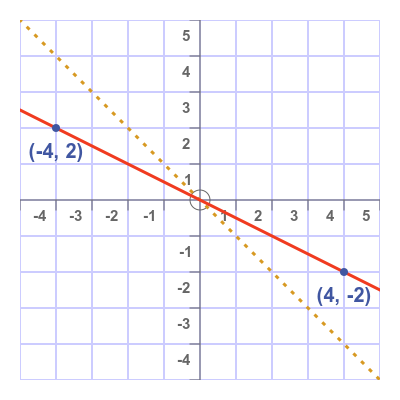
## Numbers **Build confidence with numbers and develop the skills to calculate accurately.** Number skills are the foundation of GCSE Mathematics. This topic covers working with whole numbers, fractions, decimals and percentages, as well as understanding how different types of numbers relate to one another. You will learn to use powers, roots and standard form, work with factors and multiples, and apply the rules of arithmetic. Other important skills include rounding, estimating, working with ratios and proportions, and calculating with numbers in different forms. These techniques are essential throughout GCSE Maths, whether you are simplifying a calculation, solving an algebra problem or working out the best value in a real-life situation. ## Algebra **Discover how algebra helps you describe patterns, solve problems and express mathematical relationships.** Algebra uses letters and symbols to represent numbers and quantities. It allows you to work with unknown values, describe general rules and solve problems that would be difficult to express using numbers alone. You will explore simplifying expressions, expanding brackets, factorising, solving equations and working with inequalities. You will also learn how to manipulate formulae, recognise sequences and use algebra to represent relationships between quantities. As you progress, algebra becomes an important tool for understanding graphs, investigating patterns and solving more complex, multi-step problems. Developing a clear understanding of algebra will help you tackle questions across many other GCSE topics. ## Graphs **Learn to turn equations and data into pictures that reveal mathematical relationships.** Graphs provide a visual way to understand how quantities change and how mathematical relationships behave. They are an important part of GCSE Maths, linking algebra with geometry and real-life applications. You will explore coordinate grids, plot points and investigate straight-line graphs. Important ideas include gradient, intercepts and the relationship between an equation and the line it represents. You will also develop your understanding of how to read, interpret and use graphs to solve problems. Being able to recognise patterns in graphs helps you understand what an equation means, compare different relationships and extract useful information from mathematical and real-world situations.

Geometry

Explore shapes, angles and transformations, and discover the rules that explain how they fit together.

Geometry is the study of shapes, their properties and the relationships between them. GCSE geometry combines visual reasoning with mathematical rules, helping you work out missing angles, investigate shapes and solve problems involving space.

You will learn about angles on lines, angles around a point, parallel lines, triangles and quadrilaterals. You will also explore polygons, including regular polygons, and investigate interior and exterior angles. Circle geometry introduces important circle theorems that help you calculate unknown angles and understand relationships between radii, chords and tangents.

Other key areas include symmetry, congruence, similarity and transformations such as reflections, rotations, translations and enlargements.

Geometry questions often require you to combine several facts or theorems. Understanding the reasons behind these rules helps you explain your working clearly and approach unfamiliar problems with confidence.

## Measures **Put maths into practice by measuring, estimating and calculating quantities.** Measures connects mathematical calculations with everyday situations. It involves working with lengths, distances, areas, perimeters, time and other quantities, using appropriate units and converting between them. You will develop your ability to calculate the perimeter and area of two-dimensional shapes, including triangles, rectangles and circles. You will also learn how to use formulae, interpret measurements and apply mathematical reasoning to practical problems. Questions involving measures often require you to select the correct formula, convert units or combine several calculations. Building these skills helps you tackle problems involving plans, dimensions, distances and everyday measurements.

3D Geometry

Bring three-dimensional shapes to life by exploring their properties, surface areas and volumes.

Three-dimensional geometry extends your understanding of shapes into the world of solid objects. It covers the properties of common 3D shapes, such as cubes, cuboids, prisms, cylinders, pyramids, cones and spheres.

You will learn how to interpret 3D diagrams, recognise different solids and understand how their dimensions relate to their shape. Important calculations include finding volumes and surface areas, as well as understanding how 3D objects can be represented using diagrams and nets.

These skills are useful for solving practical problems involving containers, packaging, buildings and other solid objects. They also help you visualise mathematical relationships that are harder to see in two dimensions.

Trigonometry

Use the relationships between angles and lengths to solve problems involving triangles.

Trigonometry provides powerful methods for finding missing sides and angles. It is particularly useful when a diagram contains a right-angled triangle or when you need to calculate a distance that cannot be measured directly.

You will learn Pythagoras' theorem, which relates the three sides of a right-angled triangle, and the sine, cosine and tangent ratios, often remembered using SOH CAH TOA. You will explore how to choose the correct ratio and use it to calculate unknown lengths or angles.

You will also encounter the sine rule and cosine rule, which allow you to solve more general triangles, including those without a right angle.

Trigonometry brings together geometry, algebra and numerical calculation. Understanding which method to use, and why, is essential for solving exam questions involving triangles, heights, distances and bearings.

## Statistics and Probability **Make sense of data, investigate patterns and calculate how likely events are to happen.** Statistics and probability help you understand information, draw conclusions from data and reason about uncertainty. These topics connect mathematics with everyday decisions, scientific investigations and the interpretation of information. Statistics involves collecting, presenting and analysing data. You will explore ways of displaying information, including charts and graphs, and learn how to summarise data using measures such as the mean, median, mode and range. You will also develop your ability to interpret distributions and compare sets of data. Probability focuses on the likelihood of events. You will learn to describe probabilities numerically, calculate probabilities in different situations and use diagrams or tables to organise possible outcomes. More advanced questions may involve combined events and probability trees. These skills help you interpret data critically, identify patterns and make informed decisions. They are particularly valuable when exam questions ask you to explain what results mean, rather than simply calculate an answer.

Learn GCSE Maths visually with GraphicMaths

Maths becomes easier to understand when you can see how the ideas fit together. GraphicMaths uses explanations, diagrams and visual examples to help you explore mathematical concepts and develop a deeper understanding of the subject.

Whether you are revisiting the basics, preparing for an exam or looking for a different explanation of a difficult idea, choose a topic above and start exploring.

These resources are designed to support GCSE Maths students. They cover a range of useful mathematical topics but are not intended to provide a complete GCSE course or follow any particular exam board's specification. More...